
On Gillian Rose’s Death
Robert Lucas Scott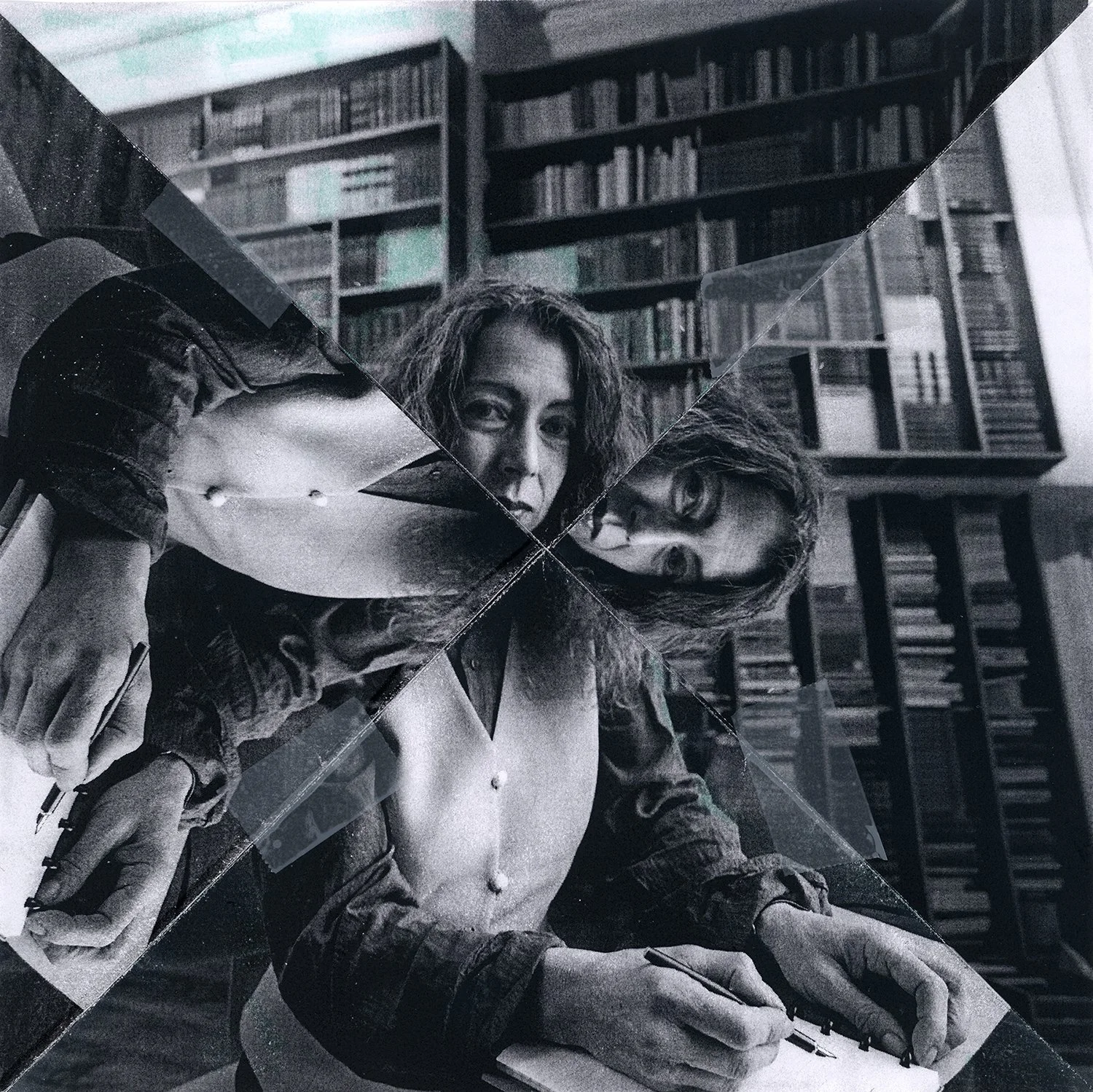
Thirty years ago, the British philosopher Gillian Rose died of ovarian cancer, aged forty-eight. Throughout her work, Rose resisted the temptation to treat death as a metaphysical abstraction or pure negation, seeking instead to understand death “in the middle”—that is, as something with social, historical, and political significance. She sought to restore death from its modern abjection and exile to a determinate, meaningful place within the polis, the shared life of the city. In this light, her final philosophical and spiritual gestures, including her late conversion to Christianity, might be understood not as a retreat into consolation, but as a final affirmation of her lifelong commitment to tarrying with the world’s brokenness.
*
But the life of Spirit is not the life that shrinks from death and keeps itself untouched by devastation, but rather the life that endures it and maintains itself in it. It wins its truth only when, in utter dismemberment, it finds itself.
— G. W. F. Hegel
Gillian Rose begins a late essay, “Potter’s Field: death worked and unworked,” collected in the posthumously published Mourning Becomes the Law, with a long epigraph from Matthew’s gospel. Feeling remorse for Jesus’s death, Judas returns his fee of thirty pieces of silver to the chief priests and elders of the temple and then hangs himself. The priests and elders, uneasy about accepting the blood money into the temple treasury, use it instead to buy a potter’s field—a plot of land stripped of agricultural value, quarried for clay, and now designated for the burial of “strangers”: those who, according to Jewish law, cannot be laid to rest in a consecrated cemetery (Matthew 27:1-10). This is the origin of the term potter’s field to describe a place for the anonymous and unclaimed dead.
While usually interpreted as a redemptive story, suggesting that Jesus’s blood pays for the salvation of all people, inclusive of outsiders, Rose’s attention is elsewhere, less interested in the eschatological promise of universal salvation than in the political structures of exclusion that persist beneath it. Her question is not what might redeem the stranger at the end of time, but what marks someone as a stranger here and now, and how their anonymous burial forecloses the work of mourning. The biblical story may gesture towards salvation beyond this world, but what does it reveal about the city of the priests and elders, and their worldly ordering of life and death? This is typical of Rose’s work. The relation between life and death never unfolds in metaphysical abstraction or holy mystification, but in what she calls the middle: in its mediation by history, by politics, by others. To talk about death apart from this is to do so at the cost of obscuring the very conditions through which death and life become meaningful.
Following the epigraph from Matthew, Rose transposes the biblical narrative into the concerns of her present:
Today, in the middle of the Atlantic Ocean, lies an island called Potter’s Field. There, on fresh winds, the foul blood of New York City is transported. For that acre of blood affords the only columbarium for the ashes of the unclaimed, derelict dead of the city—for unidentified murdered bodies, for paupers, and now, for the new category of destitution: those who die of AIDS in the triage wards of the city hospitals.
New York City, 16 May 1992: the body of my love has been taken to Potter’s Field, taken outside the walls of the city; beyond the ramparts, his ungodly ashes will have been scattered upon that collective grave for the unreprieved—without community, without commemoration and hence without end.
This time, the “strangers,” those denied burial rites and excluded from mourning, are the dead of the North American AIDS epidemic. On June 18, 1983, the New York State Funeral Directors Association urged its members not to embalm the bodies lost to AIDS fatalities. From that point on, funeral homes tended to refuse to handle them at all. Instead, the corpses were taken “outside the walls of the city”—indeed, beyond its shores—to be buried in unmarked mass graves on Hart Island. These graves were dug, in turn, by prison inmates of Rikers Island, another place of banishment for those refused within the city walls. The bodies were interred at fourteen feet, far deeper than usual, in what can only be understood as an attempt to suppress the threat they were perceived to pose, even in death. The graves were not for mourning, but containment.
For Rose, this is personal. Among the strangers buried on Hart Island is her close friend and ex-lover, Jim Fessenden. Upon meeting in the early ‘70s, three days into a study trip to New York, he took her to a concert in Central Park to hear the pianist Alicia de Larrocha play Liszt and Ravel. “In the intervals,” she recalls, “Jim tells me about his work on Nietzsche’s The Birth of Tragedy out of the Spirit of Music. I feel the stirrings again on my original passion for philosophy, which three years at Oxford have almost completely expunged. Instead of staying in New York for the three weeks planned, I decide to stay for a year.” Twenty years later, Jim’s dead body is spirited “outside the walls of the city; beyond the ramparts […] without commemoration and hence without end.”
“This is typical of Rose’s work. The relation between life and death never unfolds in metaphysical abstraction or holy mystification, but in what she calls the middle: in its mediation by history, by politics, by others.”
It is no coincidence that the word “city” appears five times in the above quotation. Again, for Rose, the question of death and mourning are not the preserve of abstract metaphysics or private existential reflection, but fundamentally concerns of the polis: the realm of the political. His dying of AIDS, complicated by starvation, depression, and drug addiction, belonged to the city—not merely in location, but structurally, in both its participation and its neglect. In her memoir Love’s Work, reflecting on the apartment where Jim lay dying—“[c]rammed with the phantasmagoria of Western culture, everything … in a more or less advanced state of decreation”—Rose describes it as “the emblem of the postmodern city.” His slow collapse, hidden away, surrounded by a decaying collection of books on art, philosophy, and literature—“scored with dirt, infested with cockroaches, stale with dust and debris”—mirrors the capitalist city’s own descent into fragmentation, neglect, and refusal. The same is true, of course, for life as well. This is why it matters that her first encounter with Jim—a moment that precipitated what she calls her “Lehrjahr,” her "apprenticeship," in continental philosophy, music, art, food, drugs, and sex—takes place in the city too. “We always knew,” she writes, “we owed the purity and the contamination of our love to the splendour and the misery of that city—to its laws and to its anarchies.”
Rose argues, then, that in spite of the city’s efforts to banish the unclean dead, to separate death from life, the dead remain a part of the city’s logic—whether or not the city acknowledges them or even permits their acknowledgement. To illustrate, Rose turns to Poussin’s Gathering the Ashes of Phocion. In the painting, Phocion’s wife, accompanied by a servant, gathers his ashes outside the boundary walls of Athens in defiance of a state decree that denied him proper burial—a parallel scene to the “merciless disposal” of Jim’s body on Hart Island. And yet, despite taking place outside the city, this illicit act unfolds beneath a city skyline: “Arising above the two foregrounded figures is a combined land- and townscape of classical magnificence with gleaming temples and municipal buildings.” For Sister Wendy Beckett, whose televised analysis on BBC 2 first drew Rose’s attention to the painting, this architecture stands for the tyrannical city of Athens—the oppressive force that condemned Phocion and which is therefore, for Sister Wendy, de facto unjust. For Rose, meanwhile, these buildings represent something more ambivalent: the possibility of rational order and justice, whose presence throws into relief the arbitrariness of the city’s current tyranny. In other words, while “Phocion’s condemnation and manner of dying were the result of tyranny,” the figure of the city as such is not reducible to it. Likewise, Jim’s erasure by the institutions and political culture of New York does not mean that justice—whether for the living or the dead—must be pursued outside or against the city, but within it.
This is not, for Rose, to commend collusion with the city’s tyrannical rule, but organization, participation, and struggle within its walls. It is to warn against the allures of quietism and sanctimony that so often follow loss, whether personal or political—a caution against the temptation “to oppose pure, gratuitous love to the injustice of the world; to see ourselves as suffering but good, and the city as evil.” To succumb to this temptation, Rose writes, would mean “we are no longer able to chant with Antigone” (another woman denied the work of mourning by tyrannical decree): “Because we suffer we acknowledge we have erred.” In other words, to disavow our implication in the structures that we protest and fight against is to abandon the difficult work of self-reflection, and to cast ourselves as perfect victims, unable to learn from loss. It is also to refuse the risks of wielding power and authority when the opportunity presents itself, for fear of violence and error, or else to refuse to recognize that what we wield is power and authority, thereby leaving the inevitable violence and error that follow disavowed and unaccountable. In either case, the result is the same: we are unprepared to work towards justice within the broken middle that we nonetheless inhabit.
*
In the following essay in Mourning Becomes the Law, “O! untimely death. / Death!,” Rose argues that the twentieth-century philosophical canon offers few resources for thinking of death as more than nothing, for investigating death’s determinations. Heidegger, Levinas, and Blanchot, for example, made death central to their thought. However, they conceived of death, ultimately, as standing only for the negation of life. For Heidegger, death is “the possibility of impossibility”—the possibility of one’s own non-existence, the possibility of a point at which experience itself becomes impossible. Levinas, by contrast, inverts this: death is “the impossibility of possibility.” He argues that Heidegger’s idea of owning or anticipating death, of “being-towards” it, is still too subject-centered. Instead, death is not something one can grasp, anticipate, or appropriate, but rather—and here he is closer to Blanchot—it is that which undoes the coherence of subjectivity, sense, and experience. For Rose, these formulations amount to “a distinction without a difference.” All three commit to a foundational nothingness as the condition of all possible experience, therefore rendering all experience, in turn, itself nothing. For all of them, Rose writes, “the contrary of life and death is unlike other contraries because all other contraries posit something”—a dialectic, a spectrum, a relation—“whereas death,” they argue, “is nothing, the contrary of contraries,” a pure otherness. Death, they contend, is thus not just without determination or meaning; it is “the violation” of all determination.
Rose, however, is not sure. As she writes in a beautiful passage (with reference to Shakespeare’s Merchant of Venice):
Does not the idea of whatever cannot be assumed draw on the richness of our reversals? Of familiar experience as reversal? Do we assume sleep, dreams, laughter, rage, sadness? In sooth I know not why I am so sad. Do we assume the moment looking from the train, when the bare, charcoal landscape heaves a deep sigh, and takes on the hazy hues of brown? Is all knowing mastery, and not rather attention, the natural prayer of the soul? Are there not determinate ways of thinking or singing which convey our reversals without the anti-metaphysics of nothing?
Even when we speak of what “cannot be assumed,” are we not still drawing on the very reversals and experiential structures that give shape to life? Of activity within passivity, of knowing without mastery, of meaning within that which resists straightforward conceptualization? Sleep, dreams, laughter, rage, and sadness: they may resist control, but they are nonetheless active in our lives—they undertake work. They are not acts of will or knowledge in the usual sense, but they are not void either. They hold form, shape, and determinate presence, even if obliquely. And so too, Rose suggests, might death. Even without a guarantee of sense, death need not be consigned to pure negation. It can still belong to the human repertoire of a determinate, expressive life. It is significant, then, that Rose’s language here shifts into a religious-poetic register—and that the essay draws upon more examples of literature and devotional writing than in any other in her oeuvre. For her, what art and religion offer are not irrational retreats, but forms of determinate engagement with what, at present, exceeds conceptual grasp. They give shape—whether through ritual, prayer, or song—to what modern philosophy and bureaucratic rationality have rendered void.
The essay then slips into verse as she writes that death “ceases to be / Solipsistic self-elegy,” and instead "pertains to a life / That has been able to grow." But “what,” she continues, returning to prose, “could be the determinations of death?” What would it mean to return death to a place in the city?
To answer this, Rose turns to the dramatic politics of Nietzsche’s character of Zarathustra. This might seem surprising given Nietzsche’s anti-Christian polemic and Rose’s own appeals to prayer and song. Yet this turn proves pivotal, for it is in the figure of Zarathustra that Rose finds a model for dying not as defeat, not as negation or withdrawal, not as nothing, nor as the final mastery of a sovereign self, but as a creative, dramatic, and ultimately political culmination: the final expression of a life lived actively in and through the tensions of history, relation, and meaning.
In contrast to the familiar lament “I may die before my time,” Zarathustra commands: “Die at the right time!” At first glance, it might read like a rather banal moral injunction: live well so you may die well. In this view, “dying at the right time” would be a function of living rightly—of mastering life as a project. “I may live before my time,” as Rose puts it. Here, the “I may” in “I may live” expresses not only possibility, but also permission, even defiance—a claim to live against the grain of expectation: I may, I can, I will live. I’m not dead yet, so I may yet live well. Then, when death comes, it will come to a life fulfilled.
“The point here, as so often in Rose’s work, is that there is nothing virtuous in performatively cleaning one’s hands of the complicities of the world.”
This, for Rose, is to miss the point. As Rose writes, such a reading too easily “assimilates Zarathustra to Nietzsche and then to a Kantian psychology and morality.” Firstly, it misses the point that Zarathustra is not a mouthpiece for Nietzsche, but a literary construction, a provocateur whose commandments are designed not to instruct but to unsettle. More importantly, this moralistic reading treats Zarathustra’s command as if issued from a faculty of the will (you can live well), and therefore subject to a Kantian categorical imperative (so you must live well). The result is a reduction of Nietzsche’s Zarathustra to the clichés of self-help or New Age sloganeering, parallel to the spirituality which preaches, in Rose’s words, “If you lead a normally unhappy life, you are predestined to eternal damnation, you will not live.” This is precisely what Nietzsche, via Zarathustra, and Rose herself reject.
Nietzsche’s point is not that we live, will, and die through a faculty (as in Kant), but that we do so within what Rose calls a “predicament”: the predicament of a will to power. “Only where life is, there is also will,” Nietzsche writes: “not will to life, but—so I teach you—will to power!” This is not the neutral power of the will applied to life, as if life were an external problem to be managed, over which one could “take control.” Rather, it names our very embeddedness in the generative struggle of forces which constitute society and history—active and passive, creative and constrained. As Rose argues in Dialectic of Nihilism, will to power is not the “free will” or power to act, but instead the key to developing a reflection “beyond good and evil” on the historical forces which underly our pretenses to moral individualism, as though we could clean our hands of the world and its complicities. For this reason, she writes, it “involves the most strenuous immersion in historical labour and imbues our acts with a greater not sparser density.”
This is the key, then, to Zarathustra’s commandment to “die at the right time,” and his commendation “of my sort of death, voluntary death that comes to me because I wish it.” Understood apart from the predicament of the will to power, this would amount only to a “nihilistic injunction to die by suicide,” in Rose’s words. Understood within it, however, it comes to mean something closer to an agonistic self-authorship: death as the final expression of a life lived not according to the dictates of a morality or ideology withdrawn from the messy dynamics of social and political life, but through an ethic of involvement within their possibilities and constraints in the impure realities of history, law, violence, and love.
This is what Nietzsche contrasts with the Christian framing of death. He argues that we should “die proudly when it is no longer possible to live proudly. Death of one’s own free choice, death at the proper time; with a clear head and with joyfulness, consummated in the midst of children and witnesses: so that an actual leave-taking is possible while he who is living is still there, likewise an actual evaluation of what has been desired and what achieved in life, an adding up of life.” He then contrasts this with what he brutally describes as “the pitiable and horrible comedy Christianity has made of death. One should never forget of Christianity that it has abused the weakness of the dying to commit conscience-rape and even the mode of death to formulate value judgements on men and the past!” Rose finds a link here with Machiavelli, who compares two kinds of deaths: a noble one of “sacrificial acts” marked by “much shedding of blood and much ferocity” and a meek one of “humility, abnegation, and contempt for worldly things.” In her own act of Nietzschean provocation, Rose writes that the blood and ferocity of the former vision of death is the “violence out of which virtue emerges.”
Rose’s point here, in endorsing Nietzsche’s and Machiavelli’s visions of a noble death, is not necessarily to present bloody, violent deaths as something to be desired or glorified, but instead to develop their polemic against a notion of death as a sickly resignation. True virtue, for Rose, whether in living or dying, never escapes political mediation and the complicities of power and violence—and that extends to radical, emancipatory politics, that which “does not […] act on behalf of your own damaged good,” but “act[s], without guarantees, for the good of all.” The point here, as so often in Rose’s work, is that there is nothing virtuous in performatively cleaning one’s hands of the complicities of the world. Instead, “the precondition for configuring virtue for the modern polity” is “negotiating the dilemma of power and violence.” In Nietzschean terms, this means confronting the will to power as the condition of our social and political becoming and belonging—not as something to be transcended, but as something to be shaped, struggled with, and lived through.
What, then, is a virtuous death? It is a culmination of a virtuous life amidst the compromises and complicities of power, conflict, and responsibility; it is a form of self-determination that preserves dignity even in frailty. And, for these very reasons, it is a part of love’s work. In Nietzsche’s words, it is a “bridge to love”:
To be incapable of taking one’s enemies, one’s accidents, even one’s misdeeds seriously for very long—that is a sign of strong, full natures in whom there is an excess of the power to form, to mold, to recuperate and to forget … Such a man shakes off with a single shrug much vermin that eats deep into others; here alone genuine ‘love of one’s enemies’ is possible—supposing it to be possible at all on earth. How much reverence has a noble man for his enemies!—and such reverence is a bridge to love.
This is no simple affirmation. It is painful, agonizing work. To confront both life and death while remaining with the violences of the world, to refuse all false salvation and consolation, and, on top of this, to love one’s enemies, exceeds the capacities of a cold, rational mastery. “In this vigilance to violence in its toils with virtue,” Rose writes, “reason is crying: reason sheds uncontrollable tears at the pain of rearranging its resources; at the pain of enlarging as well as curtailing its limits.” In other words, to reconceive death, virtue, and politics in this way—as always compromised, complicit, and impure, without fantasies of purity or salvation—is hard. But it is precisely in this tension that life and death in the city reside. As Rose concludes: “Proud death then becomes a bridge to true humility.”
*
Given her sustained critique, via Nietzsche, of religious consolation, Rose’s conversion to Christianity in the days before her death might seem, at first glance, like a retreat from the intellectual and spiritual rigor she so fiercely defended: a capitulation to metaphysical comfort, a premature mending of the broken middle. Does this not, we might ask, resolve the contradictions of modernity through religious salvation and the vision of a sacred, imaginary polis, set apart from the violence of this world? Does this not return Rose to a more conventional reading of the potter’s field—no longer, as she mobilized it, a story of political injustice in the middle, but, as it is more conventionally read, as a story of redemption in the end?
Clues to the contrary, perhaps, are hinted at in the closing poem of her essay “O! untimely death!,” a poem which ends:
What time occurs between this ‘ever failing’ and this ‘all but coming’?
My time and yours,
Time to praise all others—
Placeable and unplaceable time
What kind of temporality unfolds between a world where things fall apart—ever failing—and a future that is desired and invoked, but never finally arrives—all but coming? This is not only a theological or existential question, but a political one. What kind of time do we inhabit between a world in which we fight for justice, dignity, and self-determination, and a revolution which is delayed, defeated, or failed?
For a despairing rationalism without reason, the “all but coming” signals only deferral: a messianic hope projected outside history, beyond the city’s ruins, or suspended in the dream of a New Jerusalem that never touches the ground. For Rose, such melancholia—this aberrant mourning for a total redemption—should be displaced by both an inaugurated mourning and an inaugurated praise: a work of struggle here and now, which does not deny loss but moves through it with affirmation. Between “ever failing” and “all but coming” we are returned to “My time and yours.” This is the meaning, then, of “Time to praise all others”: a summons to generosity, attentiveness, and love even in the face of brokenness—not the time to wait passively for salvation, but to engage and struggle actively in the middle with others, within history, in the interval between failure and victory. This is not to say that revolution will not come, nor that justice may not be realized, but that even when it does there is always the possibility for future unforeseen eventualities.
“What kind of time do we inhabit between a world in which we fight for justice, dignity, and self-determination, and a revolution which is delayed, defeated, or failed?”
The line “Placeable and unplaceable time” condenses this dialectical lyric. The chronology of “placeable” historical time, located in the polis, cannot be totally abandoned. Yet it must be held in tension with a time that resists placement, a time marked by interruption, excess, and possibility—a time that can only be called eternity. To have only placeable time is to commit either to a political realism or quietism, which inevitably slips into either bureaucratic rationality or melancholic withdrawal. To have only unplaceable time, however, is to flee from reality to the comforts of lofty abstractions. To have both, meanwhile, is to acknowledge actuality while remaining attentive to the possibilities for its rupture. Rose’s eternity, therefore, is not one of a pure beyond, but that which pierces and dislocates the present and eludes its apparent determinacy and fixity. The absence of a full-stop at the end of Rose’s essay holds this openness open—an unfinished temporality which, even at the end, refuses to finalize or else erase the stakes of the middle.
In her diary entry of November 28, 1995, eleven days before her death, Rose records a conversation with a Church of England chaplain that happened earlier that day. She tells him, “I am both Jewish and Christian .… I find the Jewish affirmation of one God and the Christian Trinity, essential, especially the Holy Spirit.” At the same time, she insists, “my allegiance, equally deep to Judaism, would always prevent me converting.”
The next day, however, marks a shift. She begins with some sparse theological notes: there are “2 types” of Psalms, she writes: “‘nevertheless’ psalms and ‘therefore’ psalms.” The former "transfigure doubt, anger, humanity”; the latter are “psalms of trust, full of faith.”
Psalm 23 The Lord is my shepherd.
cf. Psalm 22 Why hast thou forsaken me?
Psalm 23 is a “therefore” Psalm. It expresses confidence and resolution, an assurance grounded on trust. Yet, as Rose’s “cf” signals, it must be read in conjunction and opposition with Psalm 22—the great “nevertheless” Psalm of abandonment, invoked by Christ as he died on the cross: “Eli, Eli, lama sabachthani,” “My God, my God, why have you forsaken me?” (Matthew 27:46) Out of this opposition emerges a dialectic of affirmation through and despite brokenness, faith sustained in the very experience of forsakenness. This “nevertheless” is itself dialectical: nevertheless—I am forsaken; nevertheless—I will trust. The double movement does not resolve the contradiction but dwells in it.
Later that day, she writes a few cryptic lines of verse:
God is not nice
God is not Uncle
God is an earthquake
The sentimental images of God must be swept aside to clear a space for a more agonistic faith in a God who disturbs foundations and does not console. In this sense, Rose’s understanding of the absolute, here figured as God, still aligns with that of her earlier book Hegel Contra Sociology: to think the absolute is not finally to achieve a static goal, nor to find the resolution that lies beyond contradiction, but to confront and intensify that contradiction, to destabilize the ground beneath one’s feet. The “life of Spirit,” to quote Hegel, still “wins its truth only when, in utter dismemberment, it finds itself.”
And then at 4.30 pm, she adds:
This is the ‘leap of faith’ (SK) [Søren Kierkegaard].
I shall not lose my Judaism, but gain that more deeply too.
Only a day before, Judaism had appeared as the obstacle to her Christianity. Here, though, they are taken to reinforce one another. Rose is Jewish and she is Christian, and for that reason, she argues, she gains each all the more. She is forsaken, she shall not want; she shall not want, she is forsaken. In her remaining diary entries, this “leap of faith,” as Kierkegaard calls it, into a contradiction that can be neither resolved nor refused is referred to as “my Good news.” A visitor arrives: “I tell him my difficult medical news and my Good news; and we are able to discuss the Good news in depth.” And again: “Simon Barrington-Ward [the Bishop of Coventry] has been to see me and heard the Good News and will hold my Baptism Confirmation Communion around a text from Dante’s Paradiso on Saturday at 6.0 pm.” She continues with excitement: “everyone will be able to be here. I shall write out the Guest list first thing tomorrow.”
On December 5, Rose committed her last written words to her diary. She lists the three vows of faith from the baptismal liturgy of the Church of England:
1. I turn to Christ
2. Repent of thy sin
3. I renounce them all evil
Baptism
Then, finally, she invokes two phrases from her own works:
despairing and sans r
Keep your mind in hell and d N
Rose died on December 9, the day of her proposed baptism party, but before it could take place. Ward baptized and confirmed her as she died. She responded to each question—“Do you turn to Christ?” “Do you repent of all your sins?” “Do you renounce evil?”—by squeezing his hand.
What are we to make of her final couplet: “despairing and sans r / Keep your mind in hell and d N”? One interpretation might be that, in baptism, Rose feared succumbing to the very temptation she had long resisted: the temptation of “despairing rationalism without [sans] reason” which she criticized in so many of her intellectual contemporaries, the all-too-rational desire for the consolation to be found in false hope—which is to say, in despair, resignation, and giving up. But this would be to ignore the invocation of the epigraph of Love’s Work, taken from Saint Silouan the Athonite: “Keep your mind in hell and despair not.” Read together, then, the lines resonate with the dialectic she drew from the Psalms: I am despairing and without reason—Why have you forsaken me? And yet, still: The Lord is my shepherd, I shall not want. “Faith,” for Rose, names not only this latter affirmation—the faith that “The Lord is my shepherd, I shall not want”—but the capacity to hold that affirmation with its other: “you have forsaken me.” This is what faith means for Rose: to “Keep your mind in hell and d N.” As she wrote in her final essay, with the most anguished ambivalence, “Christ is all but coming”—where “all but” can mean “almost,” suggesting the imminence of salvation, but also “everything except”: a double entendre suggesting a theological and eschatological tension, not simple resolution.
Far from contradicting her critique via Nietzsche of Christianity’s sentimentalized death rites, Rose’s Christian conversion enacts the very drama that both she and Nietzsche insist death can be: not resignation, but an ultimate act of self-exposure, a moment that deepens a contradiction without dissolving it into reconciliation; not an escape from the negative, but a tarrying with it. It is a dialectic held without resolution: Judaism and Christianity, Nietzsche and faith, “therefore” and “nevertheless,” “difficult […] news” and “Good news.” Even her plans for her baptism as a party, surrounded by friends, evokes Nietzsche’s ideal of a noble death: “with a clear head and with joyfulness, consummated in the midst of children and witnesses: so that an actual leave-taking is possible while he who is living is still there.” This is a death, a relinquishment, as the final act of a life that affirms itself in all its brokenness in the middle, even at its end.
This essay is an abridged extract from a book in progress on Gillian Rose.