
The Sanctuary of the Mad
Experiments in Art and Psychiatry in Morocco
Abdeslam Ziou ziou Translated by Victoria Baena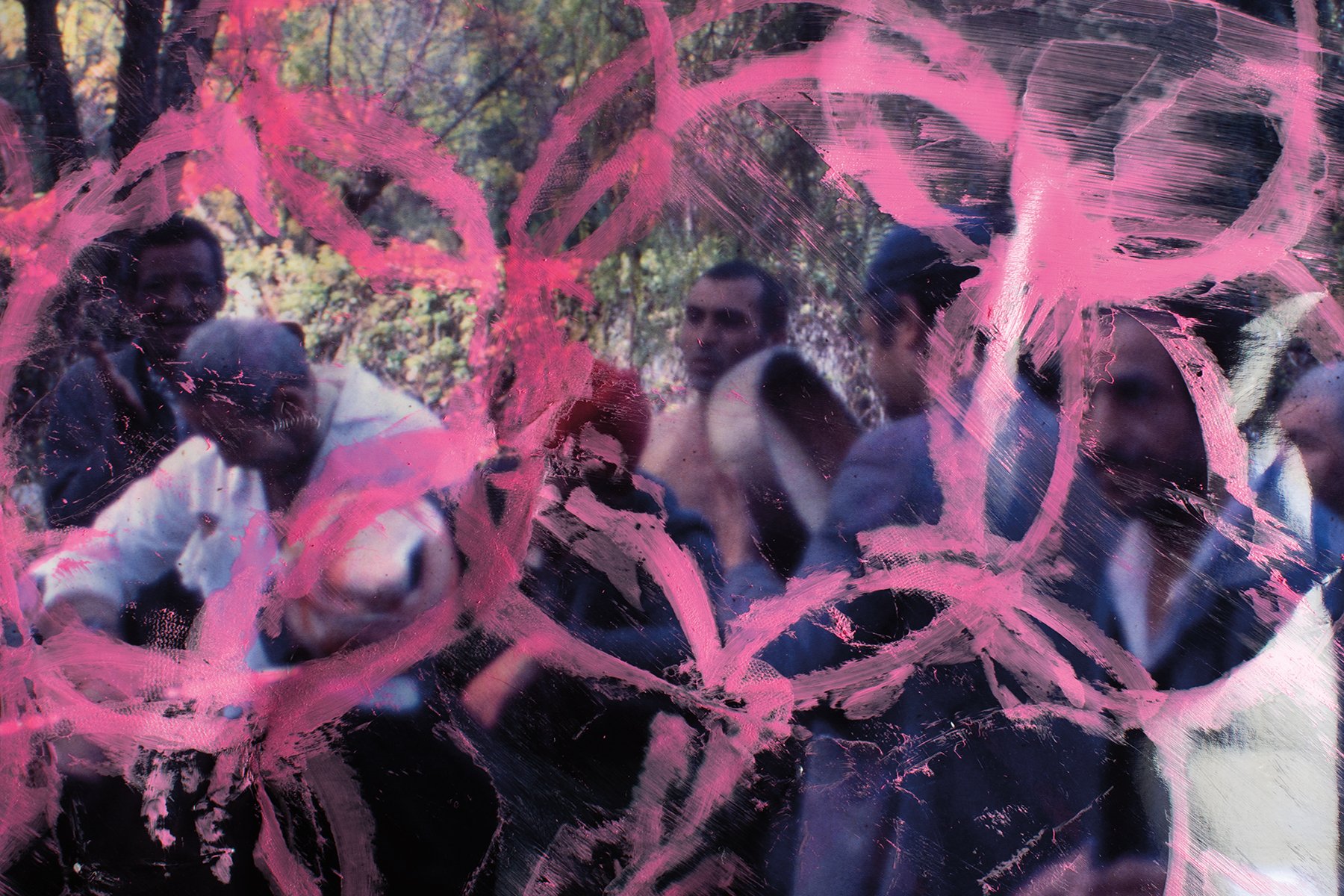
In the Moroccan collective imaginary, the city of Berrechid explicitly evokes mental illness. Berrechid is home to Morocco’s largest psychiatric hospital. To say to someone, “I’ll send you to Berrechid!” (ghadi nssayftek l’Berrechid // غادي نسيفطك لبرشيد) is to tell them, “You’re insane.” While the Berrechid Psychiatric Hospital is still remembered as a “sanctuary of madness,” it was also, briefly, the site of innovative experimentation which brought art and psychiatry together. At the core of this approach was my father, the psychiatrist Dr. Abdellah Ziou Ziou, alongside art historian Toni Maraini and artist Mohamed Melehi.
Between the 20th and 30th of May, 1981, painters, writers, poets, filmmakers, and intellectuals were invited to Berrechid to share in the patients’ daily lives. Murals were painted, concerts were organized, debates and other events took place—all drawing national media coverage. In an attempt to defy the stigma surrounding the hospital, the inhabitants of the town of Berrechid were free to visit the asylum for the first time. Beyond this single week of action, various activities were instituted throughout 1981: gardening competitions to refurbish the grounds, film screenings, and trance sessions. These activities were introduced, in part, to integrate elements of Moroccan popular culture into the asylum. Together, these initiatives brought the hospital, as it is now remembered, to life.
The Berrechid experiment was only the culmination of an enchanted parenthesis, where a more emancipatory understanding of psychiatry had been circulating—a desire to transform the very place of madness in the social world. Resonating with other experiments in Blida (Algeria), La Manouba in Tunis (Tunisia), Hopital Fann in Dakar (Senegal), La Borde (France), and Trieste (Italy), Berrechid can be considered a fulcrum for histories of art, madness, and resistance, not only in Morocco but across Europe and the Mediterranean. This wide-ranging movement aimed to dismantle the violence of the asylum and to consider madness itself as a way of being: as an intense form of suffering that requires sites for listening to the other in all their essential differences.
I was born in the last moments of my family’s presence in Berrechid, so I speak from within a family history. When I first began this project, it was to try to grasp its failure. How did the story of Berrechid come to an end? How to explain my father’s bitterness when he spoke about it? Why was it impeded? By whom?
Delving into the loose papers, photographs, and recordings preserved in my father’s archive, I came across a strength which left me astonished. I also felt a certain nostalgia for an era I can only describe as formidable. What has struck me the most while examining these documents is their capacity, even if fragmentary, to animate an entire historical period of collective action.
So I threw myself into the unbridled task of recovering the traces of these experiments: their protagonists, their origins, and their many ramifications. Presented in episodes, this archival recovery work serves as an introduction to my father’s clinical practice and Berrechid through the hospital’s various activities, interlocutors, and related experiences across various sites. I found in this work a parable of colonial legacies and institutional bureaucracy, though also a more intimate tale of friendship and exchange. These documents also bear the traces of the psychiatric institution’s resistance to change, one that has mirrored the ebbing of emancipatory experiments in psychiatry around the world.
*
Before Berrechid was understood as a node on the map of institutional psychiatry, it was a strategic location of occupation and resistance in a colonial context. Located about 40 kilometers from Casablanca, Berrechid’s psychiatric hospital emerged from French colonial in frastructure. Following its destruction in 1908, the site of Berrechid’s kasbah became a military camp. In 1912, a field hospital was established, expanding in 1919 to include a psychiatric ward for “alienated” soldiers in a context of colonial war.
In Morocco, as elsewhere, colonialism sought to purge indigenous society of all forms of deviance that might constitute a threat to the colonial public, presuming to protect the sick from society and from themselves. In their 1911 report on the status of the mentally ill in Morocco, French doctors Lwoff and Sérieux called for the creation of a psychiatric asylum for the indigenous population on the ruins of the maristân (sites of medical care for deviance in Muslim societies that became sites of confinement and management in the early twentieth century) and for the establishment of psychiatric wards in military hospitals for Europeans. The 1919 creation of the psychiatry department at the military field hospital in Berrechid could thus be mapped precisely onto the expansion of colonial power, even as it also echoed a much longer history of confinement and control.
By 1927, under Dr. Du Mazel, Berrechid transitioned into a civilian institution, presented as a model of modern psychiatry. The hospital’s capacity grew rapidly, from 170 beds in 1932 to 1,850 at Morocco’s independence in 1956. Yet, decolonization did not dismantle the logic of institutionalization—Berrechid remained the country’s central asylum, absorbing chronic patients from across the nation. Overcrowding intensified in the 1960s, with 2,400 patients recorded in 1964. In 1973, the hospital lost its autonomous public status, triggering a financial and staff crisis.
In 1979, with the appointment of the hospital’s first Moroccan director (his French predecessor had been convicted of aggravated corruption), a new era began for the hospital. Much had changed since the colonial era and Morocco’s 1956 independence: by the 1960s, the city was no longer a colonial outpost, and the hospital was firmly at the center of the local economy. But the new director, Dr. Abdeljebbar Ezzine, had also inherited an institution in crisis. Aware that he would not be able to turn the situation around on his own, Ezzine called up his friend—my father—who agreed to join him in transforming and reorganizing the hospital. Together, they hoped to improve the conditions for admitting patients; to combat abuses of power within the institution; and to train the nursing staff in a way that could genuinely humanize the hospital. To institute these reforms, my father planned to draw on the principles he had developed over the course of his career, inspired by a transnational network of thinkers, activists, and encounters across Morocco, France, Italy, and Algeria. Perhaps most significant among these was his lasting friendship with Jeanne Wiltord. A Morocco-based Martinican psychiatrist, Wiltord’s own life trajectory speaks to the entangled histories and movements linking Berrechid to contemporary radical experiments in psychiatric care across the globe.
*
When Jeanne Wiltord arrived in Casablanca in 1975 to take up a position as a hospital psychiatrist, it was not her first encounter with Morocco. Two years earlier, she had traveled to Guelmim. She felt she needed to “connect her personal questions to the question of Africa.” During a Guedra guelsa, a typical dance from the region, she was seized with a conviction: “This is where I want to live.” In a flash, she had perceived a deep connection with her native Martinique, which she had left years earlier in order to pursue medical studies in France.
After May ’68, Wiltord had delved into the radical critiques of asylum psychiatry that were spreading through postwar France. She visited the clinic at La Borde, where she observed Dr. Jean Oury and Félix Guattari’s experiments with new forms of listening and treating mental suffering. At La Borde, she observed their efforts to reveal what Guattari considered the “true face” of psychosis: “which is not that of strangeness or violence, as is often believed, but that of a differ- ent relationship with the world.” When she arrived in Casablanca in autumn 1975, she was assigned to El Hank Psychiatric Center—one of only two mental health facilities in the city.
El Hank Center was located at the foot of Casablanca’s iconic lighthouse on the western tip of the city, battered by the Atlantic winds. Jeanne arrived to discover a dilapidated institution, with men and women crammed in inhumane conditions, lacking hygiene or dignity. It had become a site of internment for any so-called deviants rejected by society, not just those suffering from mental illness, where the chronically ill became chronically caught in a loop between El Hank and Berrechid.
Jeanne quickly grasped that her mission exceeded the mere administration of care—that it would be necessary to radically reshape the site itself. To do so, she would learn to rely on the dynamic team of young Moroccan residents and psychologists equally committed to its transformation. Their names were Hafid Boukili, Assia Akesbi, Mustapha Thami, and my father, Abdellah Ziou Ziou.
The announcement of the appointment of a French psychiatrist to head the department prompted a certain level of suspicion: “Another French person who will teach us how to work with our patients without even speaking their language,” my father initially thought, as he would later tell me. When he finally met Jeanne, he was surprised to find no distant or condescending figure, but rather a luminous, charismatic young woman. With her anticolonial commitments and intense desire for change, she quickly gained the team’s trust. They formed a group united by the urgent desire to practice psychiatry differently.
By February 1976, riding on a national momentum for reform, Jeanne had helped to negotiate the transfer of the El Hank patients to Pavilion 36 of Casablanca’s Averroès Hospital. Under her leadership, Pavilion 36 became an experimental hub. Her reforms were inspired by the principles of institutional psychotherapy that Jeanne had initially encountered at Clinique de Cour Cheverny, known as La Borde, itself founded by Jean Oury after training from François Tosquelles at Saint-Alban. Institutional psychotherapy’s philosophy argued that curing institutions was a fundamental precondition for curing its patients’ psychoses. As Alice Cherki, a psychiatrist who worked with Frantz Fanon at the Blida Hospital between 1954 and 1957, reflects, institutional therapy enables caregivers and patients to “recompose together a social fabric, where the broken thread of a suffering subjectivity can be expressed.”
Rebuilding the social fabric was indeed Wiltord’s aim, through reforms that included adapting La Borde’s model of therapeutic clubs to a Moroccan context. It was my father, Jeanne would later tell me, who coined the Arabic term Al Nadi (the home/club). The Nadi’s activities ranged from cinema sessions on Thursdays to painting workshops on Mondays and music on Tuesdays. Once a month, organized excursions enabled patients to venture beyond the walls of the asylum and to experience nature on the outskirts of Casablanca. There were also the weekly meetings, every Thursday at 10 a.m., where chairs would be arranged in a circle in the garden: there, under the medical team’s guidance, a space was carved out for speech. Patients and staff alike could speak about anything, profound or banal. They could express opinions, including criticism of their treatment, and even propose alternatives. Jeanne saw these meetings as opportunities to challenge medical hierarchies and to replace them with active listening. As patients regained their right to speak, the therapists learned to listen, rather than patrol.
*
In early September 1977, Jeanne, my father, and his colleague Assia Akesbi arrived in Trieste, Italy for the third congress of the International Network for Alternatives to Psychiatry. It was my father’s first time traveling outside Morocco. He had been poring over texts by R.D. Laing, David Cooper, and Franco Basaglia, and he looked forward to the opportunity for learning and exchange: a chance to substantiate the intuitions and therapeutic practices that they had been experimenting with at Pavilion 36.
The congress brought together nearly 4,000 people over 5 days. It took place in Trieste because of the city’s central role in alternative psychiatry; since the early 1960s, figures like Franco Basaglia, Franca Ongaro Basaglia, Giovanni Jervis, and Franco Minguzzi had led campaigns across Italy to reimagine the asylum.
My father was fascinated by what he witnessed in Trieste. The wide-open spaces of the hospital were strangely reminiscent of the equally vast asylum in Berrechid. One of its pavilions could well have been the Averroès Hospital’s Pavilion 36. To this day, my father remembers these events with intense emotion: he speaks of passionate discussions, of a memorable meeting with Cooper, and, especially, of his friendship with Mony El Kaîm, one of the founders of the systemic therapy movement, who would profoundly inspire his own practice.
As my father would also tell me, the Trieste meeting came to a dramatic close with violent disruptions by French and Italian autonomous activists, who accused Basaglia of releasing patients from the asylum only to imprison them anew in work. All psychiatrists, these activists claimed, were potential cops underwriting the State. The discussions were tense, the critiques vitriolic: in one tussle on the final day, Basaglia even broke a rib.
For my father, occupying the periphery had its advantages. While the European movements argued over who held the most radical position, he came to consider them, together, as a kind of toolbox. He would draw practical lessons from each: from British anti-psychiatry, for instance, he took a set of insights on psychosis—the importance of centering the schizophrenic’s lived, embodied experience beyond their status as mentally ill. From institutional psychotherapy, he would retain the need to pressure institutions from within in order to eradicate their violence. And from the Italian experiments, he grasped the danger of leaving madness to specialists alone, and the importance of breaking down the walls between an asylum and the outside world.
Madness as suffering, but not as a pathology to be incarcerated: this was the essential lesson of the Italian journey. A madness that must be placed in conversation with society, in order to make room for each person’s difference.
Back in Morocco, however, one question would continue to preoccupy the team. What might such an alternative to treating and listening to mental suffering look like here?
*
At Pavilion 36, my father observed that the overwhelming majority of patients had initially passed through popular treatments before ever consulting a psychiatrist. He began to research these popular practices, resulting in a series of articles, interviews, and conferences. This intensive study allowed him to lay the foundation for a third way of treatment, one located between two universes of care often perceived as antagonistic. My father preferred the term “popular” to “traditional” practices: the term “traditional,” he felt, discredits such therapies, confining them to an image of a culture frozen in place. He would speak of “Moroccan therapy” not out of nationalist chauvinism but because these practices emerged from a specific territorial, social, and cultural context, even as he equally rejected a uni- versalist vision of madness that would deny any cultural specificity. Each psychosis is unique, he claimed, each suffering singular. Here he was inspired by psychoanalyst Gisela Pankow, whose seminars he had attended during his year of specialization in France. She had taught him, he said, “not to get stuck in the diagnosis: there is not one schizophrenic, there are schizophrenic masarat (Arabic: paths or trajectories); each schizophrenic has their own schizophrenia.”
n Morocco, such practices included the ziyara, a pilgrimage to the sanctuary of a Siyyed (marabout/shrine). The ziyara, a visit to the tomb of the saint, was usually undertaken by women, for whom such practices offered a rare space of equity. Once there, they would light candles, make seven turns around the tomb, kiss its four pillars, then lift the cloth that covers it to begin an intimate dialogue with the soul of the Siyyed. In this moment of confession they “emptied their hearts,” before depositing a monetary offering (ftuh). In a 1985 inter- view, my father drew a parallel between these practices and psychoanalytic treatment. Both involved a defined time frame, a financial transaction, and the presence of a therapist who would adopt the position of listening. “In this [psychoanalytic] cure,” he said, “the analyst is like the dead body that listens.”
Such a resonance between psychiatric and popular care speaks to what the anthropologist Stefania Pandolfo has called a certain “commensurability in practices of the unconscious.” For my father, this was not about placing distinct practices on an equal footing, but rather about seeking to inscribe psychiatric therapy into a cultural and social whole, enabling practitioners to enter into genuine dialogue with their patients.
My father also grew interested in possession as a participatory social practice among various mystical brotherhoods. At Pavilion 36, he and Jeanne Wiltord invited Maâlem Sam, a master from the Gnawa brother- hood, to come to the hospital to discuss the therapeutic practices of his brotherhood and their possession cult. If a person was inhabited by a spirit (melk), they would organize a vigil (lila) led by a maâlem gnawi and assisted by a mqadem, the local leader of the brotherhood. The ceremony followed a series of rituals aimed at putting the possessed person into a trance, at which point his melk would be invoked by the maâlem through music and song.
Trained in Cartesian psychiatry, my father found it difficult at times to grasp alternative ways of expressing suffering. He noted that when patients were aware of their doctor’s rational framework, they would adapt their speech accordingly, eager to provide what would be necessary for a diagnosis. Yet in the face of the denial of mental illness and the repressive practice of confinement, he recognized, popular therapies also offer a space where behaviors deemed deviant can be integrated into a framework of collective understanding. Thus, he came to interrogate his own approach, making an effort to find a third way beyond the kind of linear thinking which considered psychic suffering as an equation to be solved.
My father came to think of this third way as a mode of labyrinthine thinking. Inspired by the work of the Sufi scholar Ibn Arabi’s Meccan Illuminations, as well as by Abdeslam Ben Mchich, the luminary of Moroccan Sufism, and his Salat al Machichiya, he conceived labyrinthine thinking as an opening onto the world. It was a way of listening to one’s own society; allowing oneself to be surprised; approaching popular therapies with flexible thought and practice. Labyrinthine thinking, with its possibilities of getting lost, could invite new, creative ways to enter dialogue with a mind in pain. It might be understood, ultimately, as an ethics of encounter.
*
In 1978, with her mother facing health problems, and amid intensifying institutional inertia, Jeanne decided it was a good time to return to her native Martinique. My father left for France to pursue his psychiatric training, and upon his return to Pavilion 36 in 1979, he found that, without Jeanne, the momentum had stalled. So when Dr Ezzine came to see him, proposing that my father join Berrechid’s medical team, he jumped at the chance. As head physician, my father hoped to be granted the necessary leeway to put into practice what he had learned from his previous experiences.
Upon his arrival at Berrechid, my father was entrusted with the management of the Abou Walid Pavilion and other wards reserved for the chronically ill: a special category of patients that had essentially been created by the psychiatric institution itself. Many had been admitted for acute crises and never emerged again. These patients were the pure products of an asylum logic, those who, over the course of multiple hospitalizations, ended up being absorbed by the system, with no prospect of release.
Family abandonment could play a crucial part in the situation of the chronically ill. Some families had broken all ties with their loved ones, delegating the management of their illness entirely to the hospital. Other patients were vagrants, without civil status or a fixed address, who had been arrested during raids or “clean-up” sweeps of public spaces carried out by the authorities.
Another, more insidious reality also emerges from the medical archives: forced hospitalizations for reasons of inheritance and dispossession. A parent might be confined in the hospital in order to appropriate his or her assets; a wife could be removed so as to take custody of her children; a brother or sister who was different or disturbing might be shut away.
In that light, my father understood that one of the major challenges of his work would be to try to de-chronicize the hospital, to restore the possibility of exit for patients confined in a system that no longer considered them capable of recovery.
As soon as he arrived, my father formed a close friendship with head nurse Salah Al Idrissi. Originally from Oulad Hriz, Salah had a diploma in psychiatric nursing. Tall, imposing, and sporting a characteristic moustache, he was known for his jovial mood and for his unwavering commitment to care. Together, they formed an inseparable duo. They were driven by the same ambition: to break with the logic of chronic illness that had locked the hospital into a damaging stagnation.
Among the chronically ill patients at the Abou Walid Pavilion, my father was particularly drawn to the case of Mr. Ben M. At the time of my father’s arrival, Mr. Ben M. was working as a hairdresser for his fellow patients. The job enabled him to earn a little money and to benefit from a certain freedom of movement. When he looked closely at his medical file, my father discovered that Mr. Ben M. had been hospitalized in Berrechid since 1950—nearly 28 years. The medical file indicated that Mr. Ben M., like many Moroccans of the time, had been a corporal in the French army and had fought during the Second World War. Following an acute attack, he had heard voices telling him to jump out of the window of the Saint-Maurice military hospital in France. He was transferred to a hospital in Marseille before being evacuated to Morocco.
My father was struck by the reasons listed for his admission and return to Morocco, noted in his file upon his arrival in Casablanca: “Haughty and uncommunicative attitude. Claims at the entrance to the unit that his name has been misspelled. Declares that Morocco must belong to the Arabs. Complains of being kept illegally in prison. Wants to return to his bled, his homeland: the Rif.”
The report of his inspection goes on: “Syndrome of querulous paranoia. This patient has already been committed and his current condition requires renewed hospitalization at Berrechid HP.” Another document on his medical history would indicate: “Behavioral disorders in an (a)rab, externalizing ideas of persecution and auditory hallucinations.”
Subsequently, Mr. Ben M. embarked on a long administrative battle to obtain his military disability pension, which had been refused by the army on the pretext that his condition had arisen after enlisting.
When he arrived in 1980 at the Abou Walid ward, my father found Mr. Ben M. among the other chronic patients in the hospital, which he was stubbornly refusing to leave for fear that his pension would be withdrawn. Years later, my father would present his case at a conference in Tunisia: “We note, according to this text established in 1947 in France, that Mr. Ben M. was treated as an Arab and not as a patient. [. . .] The patient does present a delusion of persecution. However, reading the files of patients hospitalized in psychiatric hospitals during the colonial period, and even in the several years following, tells us that nearly 80% listed this pathology.” How, he wondered, could someone be condemned to life in an asylum for hallucinatory activity, for claiming that his name was misspelled, or for asserting that Morocco should belong to the Arabs?
Mr. Ben M. finally left the hospital in November 1983. In some ways the case highlights the absurdity of chronic confinement, but it also demonstrates how political and cultural biases played a crucial role in diagnosis and treatment. It was to break with this legacy of chronicity that my father and Salah Al Idrissi would embark on their most significant reforms.
*
Among the reforms my father instituted was a meeting between caregivers and patients held every Wednesday: an open space for discussion within the pavilions that aimed to free up patients’ speech. The idea was to interrogate care practices in psychiatric settings, equipping patients with a greater role in managing the therapeutic clubs themselves while also encouraging doctors, nurses, and administrative staff to develop a genuine practice of listening.
At first, the initiative met with reluctance. Some caregivers believed that these “techniques could work in Europe,” but not in Berrechid, where the patients were “undisciplined, uneducated, aggressive,” and, for the most part, from rural backgrounds. After a few sessions, members of the medical team went to see my father to ask him to put a stop to the meetings: “The patients dsrou [have become bolder]; they are no longer afraid of us.” The practice triggered a debate among caregivers: were they there to control patients or to cure them? Were they security guards or were they therapists?
The Wednesday meeting was a space for patients to express themselves and for medical staff to listen. It was where patients would come to sing, play an instrument, tell their stories, and share questions that intrigued them (“Is the night longer than the day or the day longer than the night?”). They discussed the organization of the hospital, but they also expressed their desires and dreams for the outside world. Some attended simply to pass the time, for the chance to get out of their ward. The central group of patients and caretakers that emerged from these exchanges served as the foundation for other activities that also aimed to make the hospital come alive.
Through gardening workshops, for instance, my father sought to get the patients out of the wards, doing physical activity while also making the courtyards more visually pleasing and bringing flowers into the hospital.
Until this point, only a few patients had been allowed to participate in gardening activities, a task often rewarded by the medical staff with cigarettes or a film screening. To expand this initiative and involve the entire hospital, the medical team organized a massive gardening competition between the 19 pavilions of the hospital. Above and beyond developing green spaces, it became a genuine collective event, marked by competition, and concluded with a party in the winning pavilion. For my father, celebrations played a crucial role in weaving together the hospital’s social fabric. With his team he would reproduce this commitment in several ways, from organizing soccer matches to making space for the observance of Muslim festivals.
At the beginning of autumn 1981, under a radiant sun, teams formed within the asylum played the final matches of their soccer tournament. As with the gardening competition, such events were far more complex than simply strategies to occupy the patients’ time. During the preparatory meetings, there had been a discussion about adapting the rules of the game. Some members of the occupational therapy committee suggested changing the rules of soccer to make them “accessible to mad people,” citing the patients’ age and lack of practice at sports. My father saw this as a projection of the caregivers’ own anxiety: after years of inactivity, they were wary of the patients’ embodied movement. In response, he firmly insisted on maintaining the classic rules of soccer, believing that “bringing patients back to reality” required a clear and structured framework. Playing soccer would allow patients to get out of their ward, regain physical coordination, and reconnect with a more grounded perception of space and time.
Eventually, a compromise was reached: the tournament would go ahead with a few adjustments—eliminating offside and corner kicks and having a nurse on the field supervise play. But the modified rules quickly sparked protests among players and spectators. Some patients were reluctant to dribble or challenge the nurses, while the nurses sometimes encouraged pa- tients to position themselves offside to score goals. As the tournament progressed, the patients’ demands for the use of the original rules became more insistent.
For the final, between the Abou Al Kacem and Ibn Rochd Pavilions, the classic rules were finally re-established. The event took on the signs of a major celebration: tents were set up around the field, tea was served, and an orchestra led by the Berrechid musician, El Moki, set up their instruments. That day, caregivers and patients, men and women, nurses and doctors, all danced together, some to the point of trance. Photographs of the event bear witness to the smile on each face—a suspended moment where the realities of the hospital briefly receded in the face of the joy of the game and accompanying festivities.
There was a very specific objective behind it all: playing soccer, respecting the rules, competing between pavilions, and ultimately transforming the event into a celebration. Such “bodies mutilated by asylum violence and years of deprivation” could get moving again, rediscovering their vitality, asserting themselves in the process. The final did not stop on the field: it continued in the pavilions, carried by the energy of the players and spectators, like an echo of this brief liberation of the body and the mind.
*
One day, early in November of that same year, while passing through the Abou Walid ward, my father noticed a patient devouring a mlaoui, a Moroccan flatbread especially prepared for festive occasions. He asked the medical officer, curious, why the patient was eating in secret. The officer explained to him that the patient had asked him to bring him a mlaoui on the occasion of the traditional Muslim Aâchoura festival: he feared he would die without ever having the chance to savor it at the festival again. This gave my father the idea of organizing a genuine Aâchoura celebration in the ward. They prepared mlaoui and the musician El Moki and his troupe returned to play music so that the patients could take part in the festival.
So the ward was transformed: mlaoui were carefully prepared, and the patients, thanks to the rhythms of the flute (lghayta) and drum (tbal), participated in a genuine trance. For my father and Salah Al Idrissi, continuing to celebrate these traditional festivals was not merely a way to interrupt the monotony of their daily lives, but also to reconnect them with a specific form of temporality, just like on “the outside.” Through this festival, they not only celebrated a tradition, but also rediscovered something of what had been taken away from them: their place in the world, their culture, their history.
Trance played an essential role in my father’s therapeutic logic at Berrechid. Like the soccer match, integrating elements of Moroccan popular culture into the hospital was a way of opening the asylum to the outside, an effort to abolish the boundary that this type of institution imposed. Trance and movement were not simply cultural practices; they could become powerful therapeutic tools. They took the body into account in the process of care, offering patients a liberating form of expression.
The approach resonated with Fanon’s experiments at the hospital in Blida, Algeria. My father wasn’t familiar with Fanon’s psychiatric works. He had read The Wretched of the Earth and The Year V of the Algerian Revolution, though less from a psychiatric perspective than as texts of anti-colonial struggle. In them he had found a shrewd theory of the psychological effects of colonialism and reflections on violence as a response to oppressive structures and on the need to decenter the European gaze in order to grasp the workings of alienation and liberation. He knew relatively little about the writer’s medical theories. Yet at Berrechid, he almost instinctively instituted methods quite similar to those that Fanon had experimented with in Blida. Like Fanon, he refused to impose rigid structures of care, seeking instead to anchor therapy in patients’ experiences, gestures, and knowledge. Like Fanon, he avoided starting from any preconceived models, instead observing the daily life of the hospital, including what was most stifling, and most liberating, within it. Without ever having studied Fanon’s psychiatric writings, he arrived at similar conclusions: the importance of working the earth in order to be anchored once more in a shared materiality; the need to disrupt isolation through collective forms of expression; and above all, the idea that madness cannot be understood without taking into account the social, political, and historical context that shapes it.
It was in this context of reanimating the hospital, of reopening to the world, that painters were invited to come and perform within the asylum itself in May 1981. This would be more than an art exhibition alone. This would be a real attempt to open the doors of the asylum to the city of Berrechid, to attempt to heal the gash between patients and the social world.
One evening in late September 1980, my father received an unexpected call from his friend, art historian, writer, and poet Toni Maraini. My father, who had known her husband, the painter Mohamed Melehi, since his student years in Rabat, had met Maraini at the Averroès Hospital, where she ran art therapy workshops in the pediatric ward. Together, they wondered if it might be possible to imagine integrating art into the asylum.
The idea hadn’t come out of nowhere. Mohamed and Toni formed the core of what is now called the Casablanca School with Farid Belkahia and Mohamed Chabâa. This artistic and cultural movement sought to reimagine practices of teaching and art in Morocco—to definitively disrupt the colonial legacy by inventing a new visual consciousness for an era marked by both political independence and its unfulfilled promises. The group was at the origin of Présences Plastiques, a series of performances in public spaces in Marrakech, Casablanca, Essaouira, and Asilah, aiming to transform visual perception and center Moroccan art.
Toni Maraini, for her part, was deeply involved in the inaugural Asilah Cultural Moussem in August 1978, a festival in which artists created murals in the medina, and in which my father took a keen interest. More broadly, these practitioners were seeking to transform urban space, aiming at what the Moroccan Association of Plastic Arts would call the “integration” of the arts into all aspects of life.
Now, Toni reminded my father of their earlier discussions. Was he ready, she asked, to give it a try? My father told her about the ongoing experiments at the hospital; he invited her to come and see for herself. From these discussions, the idea of an event that would go beyond the walls of the hospital was born: a cultural week on a city-wide scale.
Mohamed and Toni organized many meetings with artists in their Casablanca apartment to discuss the project. Many were apprehensive, some recalling the intense debates on the legitimacy of experiments, like the Moussem of Asilah, that intervened in public spaces. Ultimately, fifteen artists arrived in Berrechid on May 19, 1981, where they spent the first day visiting the hospital and meeting the medical team.
They were given a packed schedule: every morning, starting at nine o’clock, the painters would take over the interior and exterior walls of the pavilions for the painting of frescoes. The afternoon was taken up with theatrical performances, concerts, and open-air film screenings, while the evenings were dedicated to exchanges and informal gatherings between artists and medical staff.
It would take lengthy discussions and effort on the part of the medical team to explain the dynamics and conditions of the hospital. The recordings of these encounters register a sense of unease, a certain anxiety, amongst the artists: “Will we be able to work with patients? Are we authorized?” artists asked. It would depend on them, the medical team responded—on the communication they might establish with the patients.
Faced with the dilapidated state of some of the wards and the living conditions of the patients, some were concerned with the purpose of the activity around artistic personas and its perceived priority. Artist Mohamed Kacimi grew agitated: “We have to get rid of that idea! If a group of artists is just coming to decorate a hospital, then all this work is useless!” Toni agreed: “The aim is to encourage the patients to express themselves artistically, to give form to their inner speech, their imagination.”
The medical team reiterated that it was no small thing to redecorate walls that had remained barren for decades, witness to years of confinement. It was already an achievement to see artists occupying the hospital, a space often perceived as a dead end, with no exit, especially given all the fantasies projected from the outside in. We must not give too much prior importance to this work, they said, but rather trust in the encounter with madness and psychosis, and do something with it.
Artists are prone to romanticizing madness in its capacity to paint the world differently. Here, actually approaching madness, coexisting with it, and encountering it concretely made the artists recoil, shocked as they were to see how the state of some patients had deteriorated after many years of chronic confinement.
Toni later identified a real turning point in the tensions that had marked the first two days of the artists’ presence at the hospital: music. It was during a morning painting session on May 21, and my father had invited El Moki and his troupe of musicians to play in the hospital garden. When the music started, patients who had been lurking in the background emerged and began to dance, twirl, rhythmically move, and sing. It was a beautiful and liberating moment, marking the collapse of barriers of distrust and estrangement. As the painters worked, several patients approached, curious: some asked questions, others gave their opinions, and a few even picked up brushes and paints in order to participate. This was the beginning of a more collective, creative, and empathetic process of interaction with the patients.
That afternoon, the mood finally began to relax, and the artists began to overcome their apprehensions. In the evening, during a roundtable on the painters’ experiences within the hospital, the artists recounted anecdotes of chance encounters and the effects of their interactions with patients. An idea began to take hold: the purpose of their presence was not to cure the patients, but rather to participate in a genuine exchange.
Locals from across the city of Berrechid were permitted to enter starting the next day. They came to admire the murals painted outside the pavilions, to meet the artists, and to talk with patients. This all took place without security, without police—without any authority other than the medical team.
As a result of the presence of locals from Berrechid and artists in the hospital, the media became interested. The media coverage, particularly through the major national dailies, ensured significant visibility for the event. For my father, it was an achievement for the Berrechid hospital to be perceived differently. This media attention on the lively dynamic established within the hospital offered a new perspective on the hospital.
*
At the end of the cultural week, some artists requested to extend their stay by establishing a sustainable artist’s studio within the hospital. Others planned future visits to support the hospital’s daily running. However, only four days after the end of the cultural week, on May 29, my father received an order transferring him to the psychiatric hospital in Fez.
He managed to have the order canceled thanks to colleagues who contacted the minister and the ministry. He still isn’t sure why it happened, especially when the hospital was just beginning to energize. There had been no problems with the administration; he had even benefited from strong support from the medical authorities for the organization of the cultural week. Was it a coincidence? Or an attempt to silence the life being reborn within the hospital?
Outside the hospital walls, the atmosphere was hardly conducive to freedom of movement, hardly propitious for breaking away from oppressive and concentrationist models. In reality, Berrechid came within the purview of the powerful Interior Minister, Driss Basri, whose administration was crushing any attempt at emancipation and plunging Morocco into a decade marked by stagnation, riots, and fierce repression.
On May 28, 1981, the government decided to increase the prices of flour, sugar, oil, and gas. This measure provoked a call for a general strike set by the unions for June 20, 1981. This date would remain engraved in Moroccan memory as the massacre of the “bread martyrs,” as demonstrators were killed in the streets by repressive forces seeking to break the strike. An Equity and Reconciliation Commission, created in 2004, would count 114 deaths, including many cases of torture, with bodies locked in secret prisons.
The massacre took place three weeks after the end of the cultural week in Berrechid. It was a subject of particular interest to me when, while searching for journalistic archives on this experience, I came across the front pages of newspapers preparing for the general strike. On June 18, 1981, the day the strike was called, two articles by Moulim Laaroussi and Latefa Iraki describing the Berrechid cultural week can be found on the verso of the front page.
The massacre of June 20, 1981 marked the beginning of a decade of intense repression, during which the authoritarian regime grew ever stronger by balancing its budget through violence, force, and oppression. In this context, bringing a psychiatric hospital back to life could hardly be imagined as welcome. When I ask my father how the week could have taken place at all in these conditions—years that, for those of my generation, are remembered as the “Years of Lead”—he answers that, in reality, the project took the authorities by surprise. They never thought it would grow to such lengths.
But if the regime was intensifying, the resistance to a renewed life came from within the hospital itself. This period would mark the beginning of an administrative struggle that would last five years, until my father finally did leave the hospital in late 1985. He was banned from practicing by the director of the hospital, who had once been his friend. For almost a year and a half, he continued to receive his salary without being authorized to return to the hospital. Several prevention tactics would be put in place: first he was transferred to El Jadida for twice-weekly consultations; he was also separated from nurse Salah Al Idrissi, who also came under intense pressure. He would even be accused of professional negligence after the death of a patient in the winter of 1984.
During that winter of 1984, many patients died from cold, neglect, and abandonment. The ministry sent an inspection to investigate the causes of these deaths. On that occasion, my father wrote a detailed report on the situation of the hospital: what was done, what could have been done, and the reason for the current state of the establishment. He described administrative resistance and pettiness, including all the attempts to prevent it. In his archives, I found several versions, where many sentences were crossed out or edited.
*
Report to the MinisterDuring these years, my father kept a small notebook where he would record his state of mind amid the events during these years: a mood of intense disillusionment.
04/28/1983
The football field is deserted. The aisles are empty— there are only one or two patients—the gardening specialists are gardening. Everything is obstructed in the institution. All activities. [. . .] There is no more music, no more trance, no more laughter, the living bodies have resumed their deathly song. Everyone has resumed their routine. Everyone complains about the situation and says that “Ah, if we only had the means” [. . .]
The chronically ill // dangerous madmen? // ARE con- demned to suffer this asylum violence. A daily violence that isolates them every day all their life / Close the Asylums. Abolishing the Asylums is probably not a solution (cf the Italian experience) because when the ill are in a state of crisis they need a place where they can metabolize their crisis. But keep the places chronic. Make them chronic.
*
What, then, can we make of the obstructed energy of this movement? It requires us, first, to insist on “resistance(s)” in the plural. These experiments epitomized resistance to all that is repressive in the encounter with madness. Resistance to the kind of social indifference that blocks us from listening to patients and taking their universe seriously. Resistance to linear thought (as opposed to labyrinthine thinking). Resistance to the doctor’s omnipotence, ratified, ultimately, by society. Resistance to the inertia of secluded pavilions, to abandonment, to perpetual confinement.
But there are multiple kinds of resistance. Resistance to a psychiatry that dreams of something different from diagnosis and classification. Resistance on the part of a medical team to what they saw as a disruption in their authority.
In 1985, my father was finally transferred to the El Fida Health Center in Casablanca: a kind of administrative punishment, since the center was considered unprestigious in psychiatry. At El Fida, which largely housed residents from the working-class neighborhoods of eastern Casablanca, he would continue until the end of his career. There he did have a certain freedom. I would sometimes spend my school holidays with him, and I remember its white walls, the packed waiting room, the drawing workshops in the afternoon, the gardening that went on in the small allotment behind the center. I remember the kindness of Houcine and Rachida, two nurses who accompanied my father and trusted him in the management. I remember especially returning home through the Souk Jemaa market. Shopkeepers would call out to him, speak to him, offer him fruits and vegetables from their stalls. I remember the respect in their eyes.
What can we do with the energy of these impeded movements? The experiments at Berrechid remind us to read resistance as multiple, labyrinthine—and not as emancipatory alone. If alternative experiences to psychiatry have been defeated, what remains of them is, perhaps, their lingering energy, waiting to be retrieved. In the meantime, we can at least retain from these experiments a practice, a method: to make do with what one has, relying on a spectrum of interpersonal relationships and friendships. To listen to one’s society, to integrate art into all possible forms of expression, to put poetry into action. Above all, to trust in an idea that might seem mad: to open the doors of the asylum.